 Intolerances Check
Where gluten hides: 12 names that aren't “wheat”
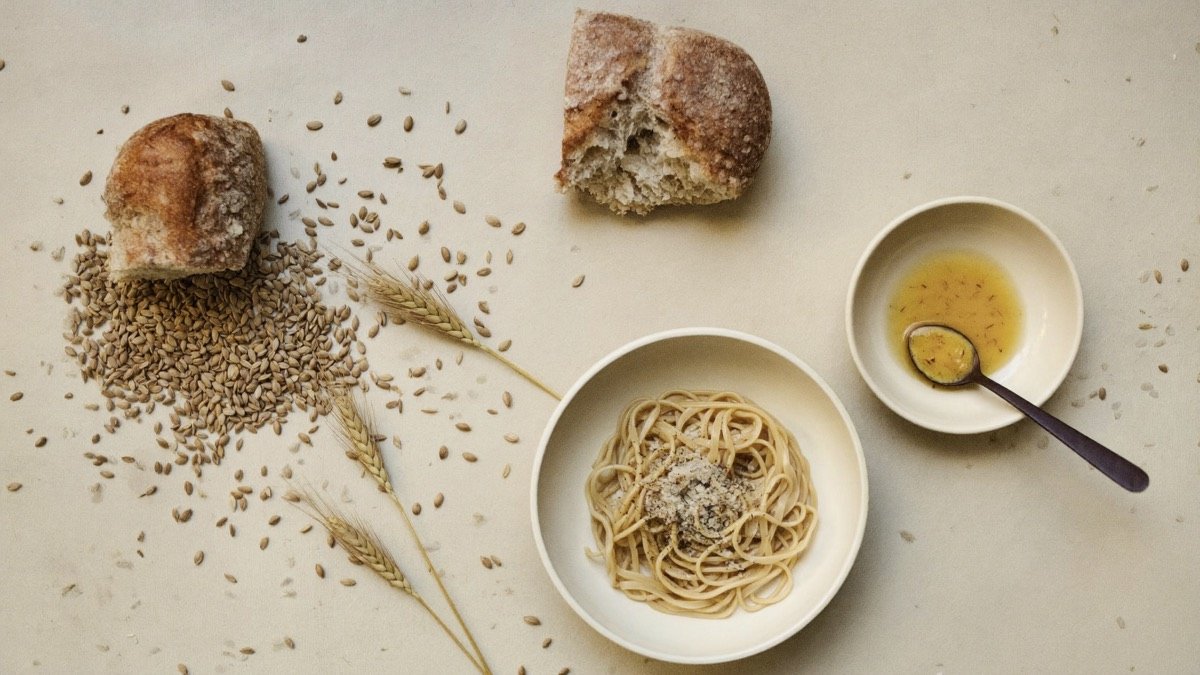
Avoiding gluten would be simple if it were always called gluten. The difficulty is that it travels under a dozen other names, several of which sound entirely unrelated to wheat.
The grains that are wheat under another name
- Semolina, durum, farina — all wheat, all common in pasta and couscous.
- Spelt, kamut, einkorn, emmer — ancient wheats, marketed as alternatives, still gluten.
- Triticale — a wheat-rye hybrid.
- Bulgur, freekeh, seitan — wheat products; seitan is essentially concentrated gluten.
The processed ingredients
| Ingredient | Where you meet it |
|---|---|
| Malt extract, malt vinegar, malted barley | Breakfast cereals, crisps, sauces, beer |
| Brewer's yeast | Spreads, supplements, savoury flavourings |
| Soy sauce | Traditionally brewed with wheat — tamari usually is not |
| Modified starch | Source often unstated; in the EU it must be declared if from wheat |
| Hydrolysed vegetable protein | Can be wheat-derived |
| Dextrin | Can be wheat-derived; maltodextrin usually is not a concern |
One piece of good newsIn the European Union, the fourteen major allergens — wheat included — must be highlighted in the ingredient list, typically in bold. So a wheat-derived starch cannot legally hide in an EU list. Outside the EU the rules differ, and the alternative names above matter much more.
The non-obvious products
These catch people out repeatedly, because nothing about them suggests bread:
- Stock cubes and gravy — thickened with wheat flour more often than not.
- Processed meats — sausages and burgers frequently use rusk or breadcrumb as a binder.
- Chips in a shared fryer — the potato is fine; the oil that battered fish went through is not.
- Crisps with seasoning — the seasoning can carry malt or wheat starch.
- Some medications and supplements — wheat starch is a common excipient.
- Communion wafers, play dough, some cosmetics — not food, still a route of exposure for coeliac disease.
Naturally gluten-free, and worth knowing
Rice, maize, quinoa, buckwheat (despite the name), millet, sorghum, amaranth, teff, and all pure oats certified gluten-free. Oats are the exception worth flagging: the grain itself contains no gluten, but it is very commonly contaminated in the field and at the mill, which is why "gluten-free oats" is a distinct product.
The limit of any label readingCross-contamination is invisible on an ingredient list. A product whose ingredients are all gluten-free may still be made on a line that handles wheat, and only a voluntary "may contain" warning would tell you. If you have coeliac disease, certified gluten-free labelling and the manufacturer remain the authority — no scanner, including ours, can see inside a factory.
A faster way to read
- In the EU, look for the bolded allergens first — it is the quickest scan.
- Learn the six processed names in the table; they cover most surprises.
- Treat "modified starch", "dextrin" and "hydrolysed vegetable protein" as questions outside the EU.
- For coeliac disease, prefer certified gluten-free over reasoning from a list.
Keep reading
Lactose-free isn't dairy-free — and why it matters
Why hard cheese is nearly lactose-free, and where milk hides under names like casein and whey.
Read the guide
5 best allergen scanner apps in 2026
What separates a useful allergen scanner from a dangerous one — ours included, weaknesses and all.
Read the comparison